
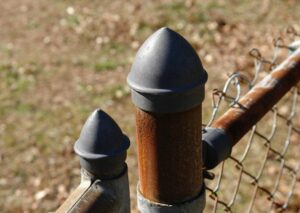
Is a rusty chain-link fence a cause for concern? Learn here.
Rust can weaken a chain-link fence and affect its appearance. Moisture, salt, and damage to the protective coating are common causes, and knowing what to look for can help you catch corrosion early.
1. Damage to the Protective Coating
Most chain-link fences are made from galvanized steel, which has a zinc coating that helps protect the metal from corrosion. However, scratches, cuts, drilling, and other damage can expose the steel underneath. Once water reaches those areas, rust can begin to form.
2. Moisture and Humidity
Rain, irrigation, and humid conditions can contribute to rust, especially when water collects around the fence’s lower edges, posts, and hardware. Areas that stay damp and don’t dry properly are particularly vulnerable to corrosion.
3. Salt and Coastal Exposure
Fences near the coast face additional challenges. Salt in the air can speed up corrosion, particularly when combined with humidity and frequent rain. Salt deposits can collect on the fence and gradually wear down its protective coating.
4. Grass, Soil, and Overgrown Vegetation
Grass, vines, and shrubs growing against a chain-link fence can trap moisture against the metal. Soil, mulch, and debris piled around fence posts can create similar conditions. Irrigation systems that repeatedly spray the fence can also keep certain areas wet, increasing the risk of rust.
5. Wear Around Hardware and Connections
Rust can affect more than the fence fabric. Hinges, latches, bolts, tension bands, and other fittings can corrode as their protective coatings wear down through regular use and friction. These areas are worth checking, particularly around gates and other moving connections.
How to Prevent Rust on a Chain-Link Fence
A few maintenance habits can help protect your fence and catch corrosion before it spreads:
- Rinse away salt: If your fence is exposed to coastal air, wash away salt deposits with fresh water and let the metal dry.
- Clear surrounding vegetation: Keep grass, vines, shrubs, and mulch from trapping moisture against the fence.
- Check for damage: Inspect the posts, gate hardware, connections, cut edges, and bottom of the fence at least once a year.
- Protect exposed metal: Clean damaged areas and apply a suitable zinc-rich repair coating to protect exposed steel.
- Watch drainage: Keep irrigation spray and roof runoff from repeatedly soaking fence posts, and remove soil buildup around the base.
Regular inspections and prompt attention to damaged coatings can go a long way toward keeping a chain-link fence in good condition.
Find Your Perfect Fence With Help from Hercules Fence Newport News
Hercules Fence has experience with nearly every type of residential and commercial fencing material imaginable, from wood and aluminum to chain link, vinyl, steel, and even temporary fencing. We have developed a reputation for quality work and fair, competitive prices. Hercules Fence is ready to serve you from six convenient locations. We have offices in Manassas, Richmond, Newport News, Norfolk, Virginia, Maryland, and North Carolina.
If you have any questions about finding your dream fence or maintenance, contact Hercules Fence today by calling (757) 316-3600 or visiting FencesNewportNews.com for a free quote!